Showing posts with label Digital Marketing. Show all posts

Wednesday, November 4, 2026

How to build repeatable revenue funnels that run with smart tooling and rigorous testing

How to build repeatable revenue funnels that run with smart tooling and rigorous testing

If your campaigns produce a few sales and then stall, the problem may not be your offer. You may need repeatable revenue funnels: systems that capture what works, follow up consistently, and use real results to improve the next round of traffic, content, and offers.

You do not need a complicated enterprise setup to build one. Start with a clear customer journey, connect a small set of tools, and test changes against outcomes that matter to your business. The goal is not to put every decision on autopilot; it is to make good decisions easier to repeat.

What makes repeatable revenue funnels different from one-off campaigns?

Build a repeatable revenue funnel by mapping one audience-to-offer journey, connecting lead capture and follow-up, measuring qualified leads and sales, and testing one meaningful change at a time. Feed each result back into the next campaign so the system improves rather than resets.

A traditional funnel describes stages: someone discovers you, considers an offer, and decides whether to buy. That picture is useful, but it can hide what happens after the campaign ends. If you create a new landing page, email sequence, and promotion from scratch every time, you have a series of projects, not a repeatable system.

HubSpot’s 2026 Loop Marketing framework describes a four-stage model in which each marketing action feeds the next. The useful idea for a small business is the feedback loop: questions from prospects inform your content, email replies reveal objections, and sales outcomes influence which traffic sources or offers deserve another investment. You keep the working parts and revise the weak ones.

Think of repeatability as an operating standard, not a promise that revenue will arrive on a fixed schedule. Your results still depend on demand, offer quality, traffic, competition, and execution. What you can make repeatable is the process used to attract the right people, help them decide, and learn from the outcome.

  • A defined entry point: A search article, social post, referral, or paid campaign addresses a specific problem for a specific audience.
  • A relevant next step: A comparison, checklist, email course, or product page helps that audience move closer to a decision.
  • A recorded outcome: Your tools show what people did after the first click, not just how many people arrived.
  • A review habit: You use evidence from leads and sales to adjust the next message, offer, or channel.

For an affiliate marketer, a loop might begin with a tutorial about choosing an email platform. Readers join a short onboarding sequence, compare tools, and click through to a recommended product. Their replies and click patterns then reveal which setup questions the next tutorial should answer. If the recommendations are not generating qualified interest, the answer may be a better match between audience and product, not another promotional email.

Choose an offer and map the customer journey before buying tools

It is tempting to start by connecting an AI writer, email platform, landing page builder, and analytics dashboard. First decide whom the funnel serves and what action represents progress. Otherwise, automation simply moves people through a journey that may not make sense to them.

Write a brief audience-and-offer statement: “I help [specific person] solve [specific problem] with [type of solution], and the next useful step is [action].” A home-based entrepreneur recommending bookkeeping software might focus on freelancers who want a simpler way to organize expenses. Their first useful step could be a comparison of common approaches, not an immediate purchase pitch.

Work backward from the sale

List the questions a person is likely to ask before choosing the offer. Do they understand the problem? Are they comparing alternatives? Do they need evidence that a tool fits their budget, skill level, or existing setup? Give each stage a useful asset and a measurable action.

  1. Discovery: Publish content that matches an actual question, such as how to organize freelance expenses. Measure relevant visits and engagement, not just total reach.
  2. Consideration: Offer a practical resource, comparison, or demonstration. Measure sign-ups, useful replies, and visits to decision-stage content.
  3. Decision: Explain who the product suits, what it costs where known, and what alternatives may be better for some readers. Measure qualified referrals, purchases, or confirmed sales when that data is available.
  4. Follow-through: Help new customers get value and collect recurring questions. Measure downstream outcomes you can observe, then use those questions to improve earlier stages.

Not every business needs an email opt-in between content and purchase. A reader searching for a specific product comparison may be ready for a direct, clearly disclosed affiliate link. Someone researching a complex service may benefit from an email series before making a decision. Choose the route that helps the reader, rather than adding steps merely because a funnel diagram includes them.

Document your starting assumptions: audience, main promise, traffic source, offer, likely objection, and primary conversion action. This gives future tests a baseline. When a campaign underperforms, you can ask whether the problem is attracting the wrong visitor, asking for too much too early, or recommending a poor-fit offer.

Build a smart funnel stack that shares useful data

A practical stack needs to support the journey you mapped, not the other way around. HubSpot identifies content, lead capture, automation, analytics, and data enrichment as typical components of conversion funnel optimization. For a solo operator, some of those functions may live in the same product; you do not need a separate subscription for each category.

Start with a publishing home for helpful content and a destination for each offer. Add a form or other lead capture method only where an ongoing relationship makes sense. Connect an email or customer relationship tool to handle the promised follow-up, then add analytics that show how visitors move from the entry point toward a meaningful outcome.

  • Content tools help draft, edit, and maintain articles, landing pages, and messages. Keep a human review step for accuracy, brand fit, and claims about products.
  • Lead capture tools record a voluntary next step, such as requesting a guide or joining an email list. Ask only for information you will actually use.
  • Automation tools deliver the resource, schedule relevant follow-ups, and stop or change a sequence when a person takes the intended action.
  • Analytics tools connect traffic sources and content to sign-ups, qualified actions, and sales where tracking allows.
  • Data enrichment tools can add context when it is genuinely useful, but they are optional for many small businesses and require care around data quality and privacy.

Choose integrations based on the questions you need to answer. Can you tell which page generated a lead? Can you distinguish a new subscriber from a returning customer? If an affiliate network reports sales separately, can you reliably compare those reports with campaign dates and tracked referral activity? You may not get a perfect person-level view, but you should know what each dashboard does and does not prove.

Give your campaigns consistent names and keep a simple record of links, landing pages, offers, and tests. Test every form, delivery email, and purchase or referral link yourself before sending traffic. A broken confirmation page can make good content look ineffective, while inconsistent labels can turn a useful report into guesswork.

The trade-off is simplicity versus detail. An all-in-one platform can reduce integration work but may limit flexibility or cost more as you grow. A set of specialized tools may fit your workflow better but demands more maintenance. Pick the least complex setup that lets you follow a lead from first meaningful interaction to the furthest reliable outcome you can measure.

Use AI automation to repeat useful work, not generic persuasion

AI can help across the journey, but its best use is to shorten the time between an insight and a better customer experience. HubSpot reports that 43% of marketers use AI to create or refine content, 35% use it for data analysis, and 47% use it to improve efficiency through automation. Those are different jobs; a tool that drafts a line is not automatically making sound decisions about your offer.

Set up automations around clear triggers. When someone requests a checklist, send the checklist immediately and follow with a message that helps them use it. If they visit a product comparison, offer a relevant explanation of the differences. If they buy or complete the intended action, do not keep sending an introductory sales sequence as though nothing happened.

Give AI a narrow, reviewable assignment

Use AI to turn notes from customer questions into possible article outlines, summarize themes in anonymized feedback, or draft alternative subject lines for a test. Provide the audience, offer, intended action, and facts it must not change. Then check the output against the real product, your experience, and your affiliate disclosure requirements before publication.

For example, suppose readers keep asking whether a recommended tool works for beginners. AI could group those questions and propose a welcome email that explains the setup process. You should verify every product claim, remove vague promises, and decide whether that email actually helps someone make a more informed choice. Automation handles delivery; you remain responsible for the recommendation.

HubSpot’s 2026 go-to-market data says customers using its Breeze Assistant for marketing tasks such as audience definition, personalized outreach, and automated follow-ups generate four times more leads than comparable customers without it. That is a reported comparison involving a particular product and customer group, not a guarantee that adding an AI assistant will multiply your leads. The actionable lesson is that AI can support several connected funnel tasks, rather than serving only as a content generator.

Put guardrails around any automated flow. Make it easy for people to opt out of emails, avoid using sensitive details merely because a tool can store them, and review messages after an offer or product changes. HubSpot’s 2026 State of Marketing characterizes effective growth as human-led and AI-supported: use software to scale timely, relevant work while keeping human judgment in charge of trust.

Design funnel tests around decisions that could change revenue

Rigorous testing begins with a question that matters. “Will this button color get more clicks?” may be easy to answer, but it is not always useful. “Will a clearer comparison help more qualified visitors choose the right offer?” connects a change to customer understanding and a potential business outcome.

Write a test hypothesis before changing the page: “For readers arriving from the beginner tutorial, replacing the generic product pitch with a comparison of setup requirements will increase qualified offer clicks without reducing completed sales.” State the audience, change, primary outcome, and possible downside. If the test wins only on clicks but produces fewer sales, you have learned something important about the quality of those clicks.

  1. Choose one bottleneck: Find a stage with enough activity to inspect, such as strong article traffic but weak movement to a relevant comparison.
  2. Investigate before proposing a fix: Read replies, inspect the page on mobile, check load behavior, and look for mismatches between the entry message and the offer.
  3. Change one meaningful element: Test a clearer promise, a more helpful page structure, or a better-matched next step. Keep unrelated changes out of the experiment when possible.
  4. Define success in advance: Select a primary metric and note supporting and safety metrics before seeing the result.
  5. Run the test consistently: Send comparable visitors to each version, avoid ending it just because an early result looks exciting, and document other campaigns that could affect performance.
  6. Decide what to do next: Keep a credible improvement, revisit a weak hypothesis, or gather more evidence if the result is unclear.

An A/B test is useful when you can send sufficient comparable traffic to two versions and track outcomes reliably. With very low traffic, splitting visitors may leave you waiting a long time for an answer. A practical alternative is to improve the page based on usability checks and customer feedback, record the change date, and monitor results over time. That approach is less able to isolate cause and effect, so describe it as an informed iteration rather than proof of lift.

VWO notes that A/B testing can surface issues affecting key performance indicators and conversions before they prompt an urgent redesign. The deeper habit is to investigate smaller problems while they are manageable. Testing does not mean changing everything constantly; it means deciding what evidence would justify a change before investing more time or money.

Measure leads, sales, and lagging outcomes without fooling yourself

Top-of-funnel numbers tell you whether people notice your work. Revenue tells you whether the journey eventually supports the business. The space between them is where many funnel decisions go wrong: a higher sign-up rate may look impressive even if those new subscribers never engage with the offer.

Build a small measurement hierarchy for each funnel. Your primary metric should represent the main decision the test is meant to improve, such as completed purchases when you can track them. Secondary metrics can show the path toward that outcome, including qualified offer clicks or requests for a consultation. Monitoring metrics catch unintended harm, such as a rise in unsubscribes or a drop in engagement with an important page. Optimizely’s testing documentation recommends diversifying primary, secondary, and monitoring goals to evaluate impact across funnel stages.

Define lead quality for your business before optimizing for more leads. A subscriber who requests a beginner resource and engages with a relevant follow-up may be more promising than a visitor who enters an email address only to receive a broad giveaway. HubSpot notes that lead quality metrics help connect top-of-funnel activity to downstream revenue and make the sales funnel more realistic.

Revenue signals can arrive late. A reader might discover your article today, compare alternatives later, and purchase after several more interactions. Google’s experimentation playbook advises that when conversion lag is long, teams should include upper-funnel conversions or consider a different testing solution. Use those earlier actions as directional signals, not substitutes for sales: check whether a change that improves qualified visits also improves downstream outcomes as more results arrive.

Also inspect technical friction before rewriting your message. Google’s “Milliseconds Make Millions” research found that a 0.1-second site speed improvement improved engagement and progress through the conversion funnel, including a 6.5% bounce-rate improvement in the travel vertical. That result does not predict the same lift for your site, but it makes speed worth checking when mobile visitors abandon a page before they can assess the offer.

For affiliate businesses, attribution can be incomplete. A network may show a sale without revealing the full visitor journey, and not every platform reports the same events. Compare only metrics with clear definitions, note missing data, and avoid claiming a test caused revenue growth when a promotion, seasonal change, or tracking issue could also explain it. Honest measurement is more useful than a polished dashboard with uncertain meaning.

Turn funnel reviews into a repeatable improvement rhythm

Once the journey is live, give it a regular review process. A funnel becomes repeatable when findings move into the next piece of content, follow-up sequence, or offer decision. HubSpot’s lead generation guidance emphasizes that funnels can make working steps visible, automate repetitive tasks, and align teams around shared measures such as conversion rate and cost per lead. Even if you work alone, those shared definitions keep your decisions consistent from month to month.

Keep a lightweight experiment log. For each change, record the problem, hypothesis, page or sequence affected, start and end conditions, primary and supporting metrics, what happened, and what you will do next. Include context such as a new traffic source or offer change. This prevents you from repeating failed ideas and makes a genuine win easier to reproduce.

Use a review that leads to action

  • Check the mechanics: Are pages loading, forms working, links going to the intended destinations, and follow-ups arriving?
  • Check the journey: Where do qualified visitors stop progressing, and is the next step appropriate for their level of intent?
  • Check the business outcome: Which sources and messages produce useful leads, referrals, or sales rather than activity alone?
  • Choose one priority: Select the most consequential problem you can realistically investigate and change.
  • Capture the lesson: Update your audience notes, content brief, automation rules, or testing plan so the next campaign starts smarter.

Consider a tutorial that attracts relevant visitors but produces few qualified referrals. Your review might find that readers are looking for a low-cost starting option while the recommended product targets established businesses. No amount of button testing can repair that mismatch. You could change the offer, explain the fit more clearly, or publish a separate guide for the more advanced audience. The right decision may reduce raw clicks while improving trust and sales relevance.

Optimizely describes experimentation tooling as moving toward self-improving digital experiences and an autonomous optimization loop. Its 2026 buyer guidance also emphasizes connecting tests to revenue, retention, and growth rather than stopping at clicks. Small operators do not need autonomous software to adopt the principle: review outcomes, carry forward what worked, and keep a human decision-maker responsible for what gets scaled.

Know when to simplify, rebuild, or expand your funnel

Smart tooling can make a weak funnel run faster, which is not the same as making it profitable. Before adding another sequence or channel, decide whether the current journey has a clear offer, a functioning path to conversion, and evidence that the audience values what you provide. Expansion is easier to evaluate when those basics are stable.

Simplify if you cannot explain why a subscriber receives each email, if multiple tools report conflicting versions of the same event, or if people are pushed through steps that do not help them decide. Remove unnecessary branches, keep the most useful messages, and track a smaller number of meaningful actions. Fewer moving parts make it easier to find broken links and understand test results.

Rebuild the offer path if visitors engage with your information but repeatedly show that the recommendation does not fit their needs. Ask what problem they hoped to solve, compare alternative products or approaches, and make your suitability criteria explicit. For affiliate marketers, a candid “not for you if” explanation can be more valuable than a polished but indiscriminate pitch.

Expand when you can see a working journey and have a specific reason to reach more people. Repurpose a successful tutorial into a useful email lesson, add a comparison for a common objection, or test a new traffic channel with its own tracking. Do not assume that performance on one channel will transfer automatically to another; audience intent and acquisition costs can differ.

HubSpot’s Q1 2026 marketing data reports that 29% of marketers prioritize improving sales, 23% focus on closing more deals, and 28% name increasing conversion rates as their primary objective. Those priorities reinforce a practical rule: judge a funnel by the business outcome it is designed to support, while using earlier signals to diagnose what needs work. More content, more automation, and more traffic are options, not goals in themselves.

Set a threshold for how much complexity you are willing to maintain. Every new tool, segment, or test adds work: someone must verify it, interpret its data, and update it when the offer changes. For a home-based business, a modest funnel that you understand and improve may be more valuable than an elaborate one you cannot reliably audit.

Repeatable revenue funnels are built through clear offers, connected tools, useful follow-up, and tests tied to real customer behavior. Start with one audience and one journey, then make the next improvement where the evidence points rather than where a new tool promises the most features.

Choose one existing campaign this week and map its path from first visit to the furthest outcome you can measure. Check that every step works, identify one meaningful bottleneck, and write down a testable change. That small review is the beginning of a system you can run, learn from, and improve again.

Tuesday, November 3, 2026

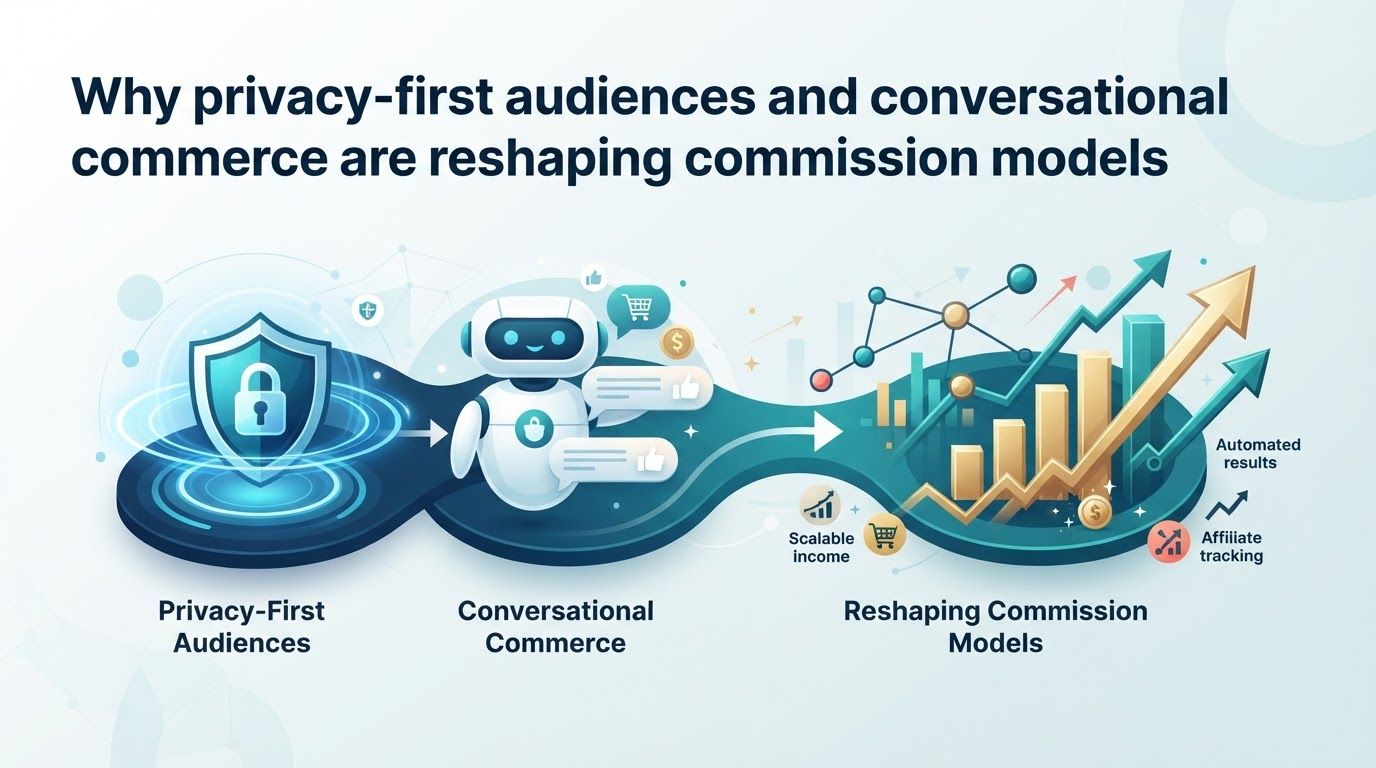
Why privacy-first audiences and conversational commerce are reshaping commission models

Why privacy-first audiences and conversational commerce are reshaping commission models

If your affiliate commissions depend on a visible click immediately before a sale, you may be missing part of the value you create. Privacy-first audiences limit the data available for tracking, while conversational commerce lets shoppers research, compare, and sometimes buy without following a familiar link-by-link path.

That does not mean performance commissions are finished. It means affiliates and brands need clearer ways to recognize helpful recommendations, consented customer relationships, and assisted sales without treating every conversation as an opportunity to collect more personal data. Here is how the shift works,and how a smaller publisher can respond without building a complicated tracking system.

Why privacy-first audiences change the economics of affiliate marketing

Privacy is no longer just a policy page issue. In Valtech’s 2026 consumer study, 43.9% of consumers cited privacy and data use as a reason they hesitate to buy, while 52.4% cited payment security concerns. Those figures describe reasons for hesitation, not a guarantee that a particular privacy change will increase your sales, but they make the commercial stakes clear.

A shopper may welcome a useful recommendation and still resist being followed across sites. If an affiliate’s content makes a product easier to understand but the shopper does not accept certain tracking, the publisher may have created value that a conventional attribution report cannot fully show. That is a business measurement problem as well as a customer-experience problem.

Privacy-first marketing does not mean knowing nothing about your audience. It means earning permission for useful data, explaining its purpose, and not making intrusive tracking the price of getting help.

IAB/PwC describes reduced access to user-level identifiers as a reason advertisers are rethinking measurement and attribution. Its reported responses include first-party data, contextual advertising, and data clean rooms. These approaches do different jobs: first-party data comes from a direct relationship, contextual advertising uses the content or setting rather than a detailed personal profile, and a data clean room can support limited analysis between parties under agreed controls.

For a home-based affiliate business, the practical opportunity is to build an audience that chooses to return. A helpful email newsletter, a clearly explained product comparison, or a buyer’s guide tied to a specific use case can build trust without requiring you to identify the reader everywhere they go. If you invite a visitor to subscribe, make the benefit and the data request understandable rather than hiding either behind a vague promise of personalization.

Usercentrics’ 2026 report frames consent as the beginning of an ongoing relationship and points to opt-in rates, data quality, and downstream model performance as ways to evaluate privacy-led design. That suggests a more useful question than “How many people can we track?” Ask whether people understand the choice, whether the information they willingly provide is useful, and whether the resulting experience helps them make a decision.

How conversational commerce compresses the path from question to purchase

A traditional affiliate journey is relatively easy to picture: someone reads a review, clicks a link, visits a merchant, and buys. Conversational commerce can rearrange those steps. A shopper might ask an AI assistant for options, refine the requirements in chat, compare recommendations, and move toward a purchase within the same interaction.

APMA’s 2026 AI search report describes agentic commerce as combining research, comparison, and purchase in one interaction. The important consequence for affiliates is not that every sale will happen inside a chatbot. It is that fewer visible handoffs may remain between the moment your content shapes a decision and the moment a merchant records a transaction.

Gorgias’ 2026 State of Conversational Commerce similarly describes ecommerce moving from a page-based experience toward one in which chat, AI agents, messaging apps, and voice assistants can act as the storefront. Google said in May 2026 that retailers could use conversational attributes to improve product descriptions and that people would be able to book hotels or order food directly from conversations in Search and Maps. These developments show why product information designed only for a conventional landing page may not cover every place a customer asks for help.

What changes for a publisher who answers buying questions?

Imagine you publish a guide to choosing a home-office microphone. A reader might use your explanation of background-noise handling, connection types, and setup effort to form better questions for an assistant. If the final recommendation or purchase takes place elsewhere, the familiar “clicked my button, then bought” sequence may never appear,even though your guide helped the shopper evaluate the options.

The useful response is not to stuff every paragraph with product names. Make your content easy to understand and verify: explain which product fits which situation, identify meaningful drawbacks, and keep specifications accurate. A buyer who encounters your advice through search, a newsletter, or an AI-mediated journey needs the same clarity as someone reading your page directly.

Expectations are rising faster than consistently excellent experiences. Valtech reports that more than 50% of consumers want brand websites or apps to be guided or fully conversational by 2026, while only 5% experience what it calls “state-of-the-art AI assistants” today. For smaller publishers, that gap is a reason to prioritize genuinely useful answers over building a flashy chatbot that cannot handle basic follow-up questions.

There is a trust dimension, too. Attentive’s 2026 retail AI report says 93% of surveyed shoppers sought outside information or proof before buying, and 64% used a seller’s website, app, or physical store for that information. The figures suggest that a conversation does not eliminate verification. Good affiliate content can help someone check a claim, understand an exception, or prepare the right questions to ask a seller.

Why last-click attribution is losing some of its explanatory power

Last-click attribution answers a narrow question: which recognized touchpoint appeared closest to the purchase? It can be useful for paying on clearly tracked transactions, but it does not, by itself, explain every reason a shopper chose a product. Privacy restrictions and conversational journeys make that difference more consequential.

APMA’s 2026 privacy-focused article warns that weakened tracking can leave publishers without commission for sales they generated and give advertisers and networks an incomplete picture of performance. Its AI search reporting also argues that AI-driven discovery is making legacy last-click models less reliable. Those are not claims that every missing click represents a stolen commission; they are reasons to stop treating the recorded last click as a complete account of influence.

Consider three distinct situations:

  • A reader follows your tracked link and buys during the recognized attribution window. A conventional sale commission may work well here.
  • A reader uses your comparison to shortlist products, then returns to the merchant directly after further research. Your influence may be real, but the usual report may not connect it to the order.
  • An AI-mediated shopping experience incorporates useful information from several sources before a shopper buys. Assigning one publisher all the credit would be as questionable as assigning no publisher any credit.

The third case is why “prove the influence” is a better direction than “claim every sale.” APMA explicitly argues for rewards tied to measurable influence, not only direct last-click attribution. Measurement should be specific enough for a brand to evaluate, yet modest enough to avoid pretending that one metric captures every contribution.

For example, a merchant and publisher could agree to assess qualified visitors from a buying guide alongside tracked purchases, or review an opt-in lead program alongside sales. Neither a visitor nor a lead is automatically worth a commission: the agreed definition, quality checks, and terms matter. But combining signals can help both parties see work that a single last-click number obscures.

Be careful with a tempting alternative: replacing lost third-party tracking with aggressive data collection of your own. It may add friction precisely where a cautious shopper needs reassurance. NRF’s 2026 consumer research says 83% of consumers share multiple overlapping concerns involving privacy, misuse, and unwanted marketing. A measurement plan that disregards those concerns may undermine the trust your content was meant to earn.

Which commission models fit a privacy-first, conversational journey?

There is no single replacement for an affiliate commission. The better question is what work the partner performs, what evidence the brand can reasonably check, and who carries the risk when attribution is incomplete. APMA suggests that structures based only on clicks and sales may need supplements such as fixed fees, licensing, and rewards for measurable influence.

Keep sale-based commissions where sales are observable

A tracked percentage or flat amount per sale remains straightforward when the buying journey produces a reliable, eligible referral. It aligns payment with completed transactions and can be comfortable for a merchant testing a new partner. Its limitation is equally clear: if tracking misses meaningful upstream work, a sale-only deal can leave the publisher doing valuable education without corresponding pay.

Use fixed fees for defined work, not vague exposure

A fixed fee can cover a specified deliverable, such as an independently written buying guide, a newsletter placement, or a set of clearly scoped product explainers. It gives a small publisher a more predictable return for research and production time. The merchant, in turn, should know what will be delivered, what disclosure applies, and whether the content must meet any agreed accuracy standards.

A fixed fee should not purchase a favorable opinion. If a product has a drawback that matters to your audience, saying so protects the usefulness of the content. For beginners, that boundary is worth writing into a proposal: the brand pays for the work and placement, while you retain the ability to make honest assessments.

Consider licensing when the brand needs your expertise in another setting

If a merchant wants to reuse an original guide, decision checklist, or other publisher-created material in its own shopping experience, licensing may be more suitable than a link commission alone. A license should identify what material can be used, where it can appear, how long permission lasts, and whether updates are included. These are negotiation points, not an implication that every mention of a product creates a licensing claim.

Conversational storefronts make this distinction particularly useful. Writing an explanation for your own readers is one job; authorizing a brand to repurpose that explanation inside its commerce experience is another. If the brand wants both, separate the deliverables so neither side has to guess what it paid for.

Blend payment types when no single metric tells the whole story

A blended arrangement might pair a modest production fee with a commission on eligible tracked sales. Another could combine a licensed content asset with performance pay for a defined referral program. A qualified-lead payment may suit a longer consideration process, provided the lead definition and permission to contact the person are clear.

Each option has a trade-off. Sale-based pay puts more attribution risk on the publisher; a fixed fee puts more short-term outcome risk on the brand; lead payments require careful quality and consent rules; licensing requires clear usage boundaries. Impact.com’s H1 2026 analysis describes brands monitoring clicks, transactions, conversion rates, average order value, and commission payouts as shoppers become more selective. A proposal that acknowledges those operating concerns will be more credible than one asking for a new fee without explaining the work or the evidence behind it.

How to measure influence without pretending every touchpoint is a sale

Start by separating activity, helpfulness, and commercial outcomes. An article view shows that content was accessed; an engaged question or voluntary signup may show more specific interest; a qualifying order shows a transaction. None of these should be silently substituted for another when discussing compensation.

A small, usable scorecard can organize the conversation with a brand:

  • Content delivery: Was the agreed guide, comparison, email, or licensed asset completed and kept accurate under the agreement?
  • Audience response: Did readers visit relevant pages, ask useful follow-up questions, or choose to receive more information? Define each measure before using it as evidence.
  • Referral activity: What eligible visits, leads, or sales did the agreed tracking actually record, and where might it have limited visibility?
  • Customer quality: Where the merchant can share appropriate aggregate results, did referred customers complete purchases, choose suitable products, or produce outcomes the partnership was designed to support?

Aggregate reporting can support decisions without handing a publisher an unnecessary list of customer identities. For instance, a brand might share totals for qualifying orders from a designated campaign or an agreed summary of lead quality. The exact arrangement depends on the tools, permission, and reporting available to both parties; do not promise a level of attribution your program cannot deliver.

Set definitions before a campaign starts. Specify what counts as an eligible sale or lead, which assets are included, what reporting each side will share, how corrections are handled, and when a review happens. If you later disagree about a result, written definitions are more useful than an impressive-looking dashboard with unclear rules.

Also look for evidence that contradicts your assumptions. If a detailed guide attracts interest but produces few qualified referrals, the topic may be too broad, the audience may be early in its research, or the offer may be a poor fit. If sales appear strong but customer questions reveal confusion, improving the explanation may matter more than increasing promotional volume. Measurement should help you make a better decision, not merely justify a higher rate.

How to use AI and first-party data without damaging trust

AI can help a small affiliate operation answer recurring questions, organize product information, and spot gaps in an existing guide. It can also create new privacy risks if a tool receives sensitive conversations or if automation makes claims no one has checked. The goal is a more helpful experience with a clear human owner, not an unattended sales agent.

A 2026 arXiv study of U.S. adult AI-assistant users found privacy concern was widespread and that participants placed especially high value on keeping humans, rather than models, out of their conversations; valuations rose for more sensitive tasks. A separate 2026 paper on privacy preference controls for agentic systems reports that some AI products still lack controls to stop ad-data sharing or block human review. Together, these findings are a reason to examine a tool’s actual settings and practices rather than assume that a conversational interface is private by default.

For an affiliate site, sensible design choices include:

  1. Ask only for information the experience needs. A product-preference question rarely requires a full identity or a detailed personal history.
  2. Explain when a visitor is interacting with an automated assistant and where their information may go. Provide a way to reach a human when an answer affects an important decision.
  3. Review generated recommendations against current product details, especially limitations, compatibility, pricing claims, and merchant terms.
  4. Give people a clear choice before using their contact details for follow-up marketing. Do not treat asking a chatbot a question as permission for unrelated messages.

Usercentrics’ emphasis on opt-in rates and data quality is useful here: collect fewer, more purposeful signals and check whether they improve the experience. If you run an email list, a reader’s chosen topic preferences may be more actionable than an opaque profile assembled from unrelated browsing. If you use an AI assistant, test whether it can honestly say “I’m not sure” and direct someone to verified details.

Transparency has limits: it is not a substitute for restraint. Research on GenAI-personalized social commerce finds that personalization can feel useful and intrusive at the same time, and that disclosure may help trust without removing privacy concerns. Tell visitors what is happening, then design the experience so they are not asked to surrender more information than the help is worth.

A practical pilot for updating an affiliate partnership

You do not need to renegotiate every program at once. Choose one merchant relationship where you already understand the audience’s buying questions and where your work extends beyond placing a link. A focused pilot will teach you more than a broad request for higher commissions with no defined change in deliverables.

  1. Map one customer decision. Write down the questions readers ask before comparing options, the evidence they seek before buying, and the point at which they reach the merchant. Identify which parts you help with directly and which parts you cannot observe.
  2. Audit the current agreement. Check what qualifies for commission, what the available reports show, and which content or channels are eligible. Record tracking gaps as uncertainties, not as a count of supposedly unpaid sales.
  3. Choose one extra contribution. Offer a useful asset you can deliver consistently: a maintained comparison, a beginner-oriented decision guide, or a permission-based follow-up sequence. Specify its scope and how you will handle updates.
  4. Propose a matching payment structure. Keep the existing eligible sale commission if it works, then ask whether a fixed production fee, defined lead payment, or limited content license better covers the additional work. Make the trade-off explicit for the brand.
  5. Agree on a review. Set the reporting definitions in advance and review both observable outcomes and what remains unknown. Continue, revise, or end the test based on the evidence you actually have.

Here is a simple way to frame the conversation: “Our guide helps shoppers narrow the options before they reach your store. We can maintain a clearer comparison and share aggregate engagement and eligible referral results. Can we test a defined content fee alongside the current sale commission, then review whether the guide helps qualified shoppers?” It is a proposed negotiation approach, not a promise that every merchant will accept.

For a newer affiliate, an alternative is to improve the existing arrangement first. Tighten your content, remove unclear recommendations, and confirm that your links and disclosures work as intended. You will have a stronger case for a blended model when you can show a useful audience, a specific deliverable, and reporting that both sides understand.

What to keep, change, and avoid as commission models evolve

Keep performance commissions where they are a fair and workable reflection of what you do. If a reader clicks your comparison and completes an eligible purchase, that outcome still matters. Privacy-first audiences and conversational commerce do not make clear referrals irrelevant; they make a referral-only view less complete for some partnerships.

Change the parts of your business that depend on assumptions you can no longer defend. If you assume every influential interaction creates a trackable click, revisit your reporting. If you assume a chatbot’s convenience automatically earns trust, examine what it asks, stores, and says. If you assume a fixed fee should cover unlimited reuse of your work, clarify the rights before agreeing.

Avoid presenting inferred influence as a verified sale. The strongest case for a new commission model is honest about what can be measured: completed work, agreed audience signals, qualified referrals, and recorded transactions. APMA’s call to reward measurable influence is not a license to count every impression as a conversion; it is an invitation to design compensation around the value a partner can substantiate.

The direction for a small affiliate business is encouraging. You can compete by understanding your audience’s questions, producing careful explanations, earning voluntary contact, and proposing payment for clearly defined work. Those strengths remain useful whether a shopper reads your whole guide, asks an AI assistant for a summary, or visits a merchant to verify the final details.

The main takeaway is simple: protect the trust that makes your recommendations valuable, then negotiate around evidence your partner can inspect. Use tracked commissions for observable sales and consider fixed fees, licensing, or agreed lead rewards when you perform additional work that the last click cannot adequately represent.

Pick one existing partnership and map the journey your audience actually takes. If the current commission rewards only a small, visible slice of your contribution, propose one defined improvement, one sensible way to measure it, and a limited test that respects the shopper’s choices.

Wednesday, October 28, 2026

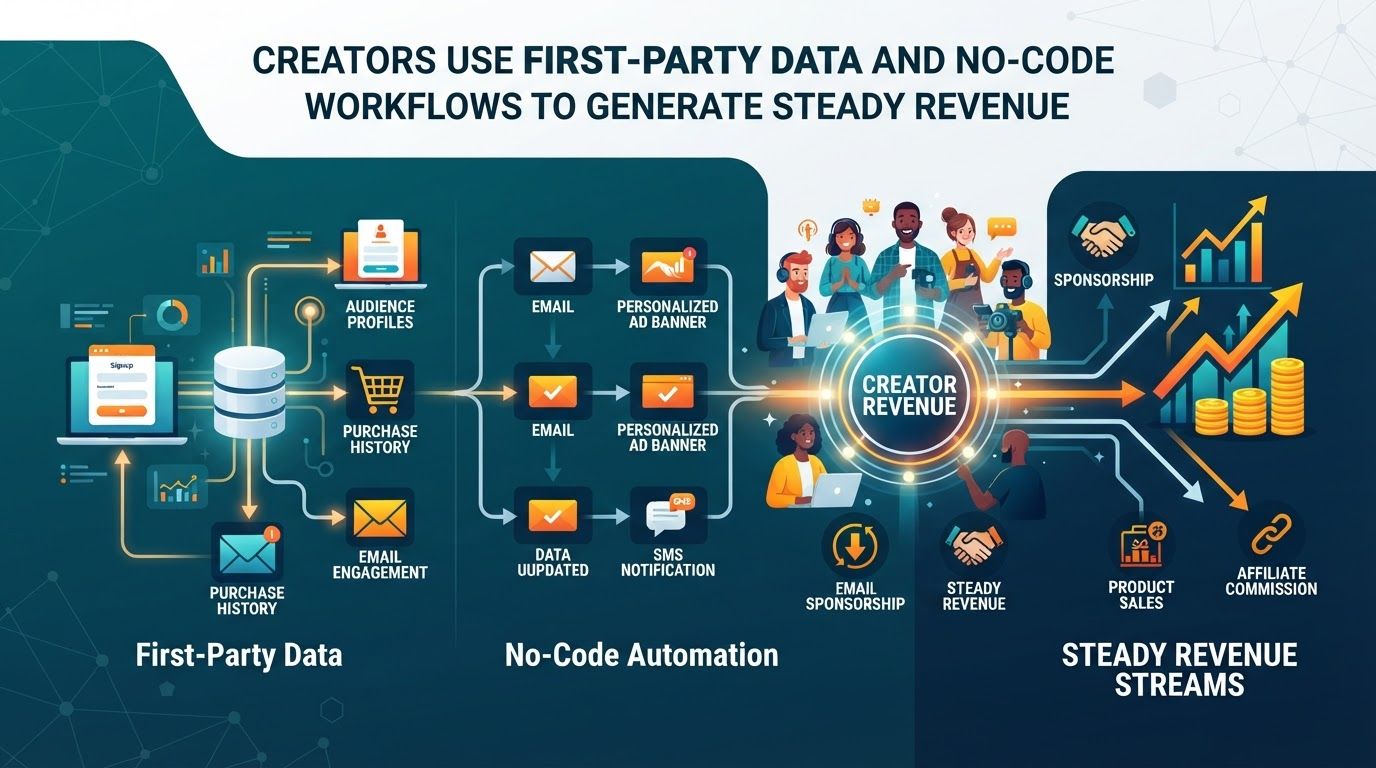
How creators turn first-party data and no-code workflows into steady revenue streams

How creators turn first-party data and no-code workflows into steady revenue streams

A creator can have a growing audience and still struggle to predict next month’s income. Turning first-party data into steady revenue streams starts by building a direct relationship with that audience, then using no-code workflows to make useful offers and follow-up more consistent.

You do not need a complicated technology stack to begin. An opt-in form, a simple way to organize what subscribers want, and a few carefully chosen automations can connect your content to affiliate recommendations, digital products, memberships, or commerce sales. The goal is not to automate every interaction; it is to make the helpful ones repeatable.

What first-party data gives creators that follower counts cannot

First-party data is information you collect through your own direct interactions with an audience. For a creator, that might include an email address someone gives you on a signup form, the content they click in your newsletter, a purchase from your store, or a reply to a question you send them. It differs from a follower count because it tells you something about a person’s relationship with your business, not just their presence on a platform.

Zero-party data is a useful companion: it is information people intentionally tell you about themselves. If a subscriber chooses “I’m starting an affiliate site” on a preference form, that answer is more useful for tailoring future emails than a guess based on a social media impression. Shopify’s 2026 direct-to-consumer trends piece highlights product quizzes as one way to collect stated preferences and use them for recommendations and marketing messages.

Consider a creator who teaches home-based entrepreneurs. A short quiz might ask whether visitors want help with choosing a niche, creating content, or setting up email automation. Those answers can guide which beginner resource appears next and which optional email sequence a person receives. The creator is not collecting data for its own sake; each question has a clear job in the customer experience.

  • Contact details let someone receive the resource or updates they requested.
  • Stated interests help the creator send more relevant lessons and offers.
  • Engagement signals show which topics deserve more attention, without requiring assumptions about every individual.
  • Purchase and membership history helps avoid promoting an entry-level product to someone who already bought it.

That direct relationship can be especially valuable when a creator earns affiliate commissions. Shopify notes that affiliate programs are moving toward first-party data and consent-driven tracking as third-party cookies phase out. An email list does not solve every attribution problem, and tracking requirements vary by partner. It does give creators a reliable place to communicate with people who chose to hear from them, rather than depending entirely on a platform feed.

Collect only the information you can explain and use to make the next interaction more helpful.

Start small. If you cannot describe how a field will improve a subscriber’s experience, leave it out for now. A shorter, more understandable signup can be a stronger foundation than an elaborate form that asks beginners for details before they know whether they trust you.

Build an opt-in that starts a useful relationship

A lead magnet works best when it solves a narrow problem that naturally leads to what you teach or sell. For an affiliate marketer, that could be a checklist for evaluating a tool before buying it. For a digital-product creator, it might be a worksheet that helps visitors identify which skill they need to learn first. The resource should stand on its own, even if the subscriber never makes a purchase.

Mailchimp’s 2026 report, The Art of the Opt-In, emphasizes that trust, timing, and restraint at signup shape engagement, data quality, and retention. In practice, that means explaining what someone will receive, how often you expect to write, and what kind of recommendations may appear. An opt-in should feel like an informed choice, not a hurdle placed between the reader and an answer.

Choose one promise and one next step

Suppose you publish a tutorial on setting up an email welcome sequence. An accompanying template is a closer match for that reader than a broad “join my newsletter” popup. The confirmation page can then point to a related tutorial, while the first email delivers the promised template. Each step continues the same conversation.

Keep any optional preference question easy to answer. A creator serving both bloggers and online shop owners could ask which path a subscriber is working on. The answer can determine whether subsequent examples focus on affiliate articles or product pages. If you have only one useful email path, skip the question until you have enough distinct material to justify it.

  1. Match the invitation to the content. Offer a resource that addresses the reason someone arrived, rather than using the same generic signup pitch everywhere.
  2. State the exchange plainly. Tell people what they will get now and what kinds of emails may follow.
  3. Make the first delivery immediate and relevant. Send the promised resource before introducing a paid offer.
  4. Provide control. Make it easy to change preferences or leave the list, and honor those choices across your tools.

This is also where acquisition quality matters more than collecting the largest possible list. Someone who asks for a specific checklist has given you context for a useful follow-up. Someone added without a clear expectation has not. The first approach gives both the reader and the business a better chance of a lasting relationship.

Connect content, data, and offers with no-code workflows

A no-code workflow is a set of connected actions that runs when something happens: a person submits a form, selects a quiz answer, buys a product, or joins a membership. Instead of copying information between tools by hand, you define what each event should trigger. Zapier reports that 34% of AI builders have no formal training, a reminder that workflow building is no longer limited to engineering teams.

For a beginner, the best starting workflow is usually small enough to draw on a sheet of paper. You might connect a signup form to an email platform, apply an interest tag based on one answer, and deliver the matching resource. After that works reliably, add a short follow-up sequence and a relevant offer. Building in layers makes errors easier to spot.

A practical example: from tutorial to affiliate recommendation

Imagine you publish a tutorial about choosing a newsletter platform. A visitor downloads a comparison checklist and selects “I have not started my list” on the signup form. Your no-code setup records that preference and delivers the checklist. A later email explains which features matter for a new creator, then offers a disclosed affiliate link to a tool if it fits the reader’s needs.

Someone who selects “I’m moving an existing list” needs a different explanation. Their follow-up might cover migration questions rather than beginner setup. The point is not to create an email for every possible combination of answers. It is to stop sending obviously mismatched advice when a simple, volunteered preference gives you a better option.

  • Trigger: A person takes an action, such as submitting a form or completing a purchase.
  • Condition: A stated preference or existing customer status determines which path applies.
  • Action: The workflow delivers a resource, adds a relevant tag, or sends a follow-up.
  • Check: The creator reviews the experience as a subscriber would and confirms that each message is accurate.

Use the tools you already have before adding new ones. Many email, commerce, and membership platforms include forms, tags, automations, and basic reporting. A separate connector can help when essential tools do not communicate, but every additional connection creates another place to check permissions, troubleshoot failures, and manage costs.

Mailchimp found that brands with highly aligned messaging and timing across channels were more likely to report high value from organic social, paid social, and generative-engine channels. For an individual creator, the practical lesson is to keep the promise consistent. If a video invites viewers to get a beginner checklist, the landing page and follow-up emails should not abruptly switch to an advanced sales pitch.

Test a workflow with your own address before sending traffic to it. Check what happens when someone selects each answer, already owns the product, or unsubscribes. Then review it whenever an offer, link, or tool changes. A modest workflow that runs correctly is more useful than an elaborate funnel that quietly sends the wrong message.

Turn the same audience insight into several revenue streams

Steadier revenue does not require selling everything at once. It comes from understanding a recurring audience problem and offering sensible ways to solve it at different stages. Your content can help someone for free, introduce a suitable affiliate tool, lead to your own product, or support an ongoing membership. Each offer should have a distinct purpose.

Affiliate recommendations

Affiliate income fits naturally when a creator teaches a process that uses outside tools or services. Data from signup preferences and content engagement can reveal which tutorials deserve a tool comparison or setup walkthrough. The recommendation still needs to be honest: explain who the product suits, where it may fall short, and that you may earn a commission when applicable.

A sequence can make those recommendations available long after a post is published. For example, someone downloading a website-planning worksheet might first receive guidance on choosing a format, then a tutorial on publishing, followed by an optional recommendation for a relevant service. That is a repeatable path, not a guarantee that every subscriber will buy.

Digital products and owned commerce

Templates, mini-courses, guides, and merchandise give creators an offer they can price and improve themselves. A quiz or preference form can help point people to the right starting product. Shopify describes product quizzes as a way to gather zero-party data for recommendations, but the simplest version could be a single question that distinguishes beginners from experienced buyers.

Shopify reports that AI-referred sessions in its data convert 80% better than organic search, with average order values 14% higher; it also says AI channels convert nearly twice as many first-time customers as other channels. These are Shopify-reported channel comparisons, not a forecast for an individual creator. They reinforce the value of having a clear product page and a useful way to continue the relationship when discovery happens through new channels.

Memberships and repeat purchases

A membership can fit when the audience benefits from ongoing access, fresh material, or a continuing community. It is less suitable when a one-time download fully solves the problem. Before launching one, ask what you can reliably deliver after the initial excitement fades and whether members will understand that ongoing value.

Patreon says its Insights dashboards show a creator earnings funnel and how content drives new revenue and new free members. That makes it possible to compare the content that attracts people with the content that prompts them to support the creator. Free-member growth alone is not the same as paid-member retention, so examine both the path into the membership and the experience after joining.

Owned commerce can also become substantial infrastructure. Shopify reported that American businesses on its platform generated $688 billion in economic activity and supported 2.3 million U.S. jobs in the last year it measured. That broad economic figure is not a typical creator outcome. It illustrates that selling through established commerce tools is a real business route, while your own pricing, demand, and fulfillment determine whether it works for you.

Choose a first offer based on the problem your audience has already shown you, not on which revenue model sounds most scalable. If people repeatedly ask how to choose software, a carefully disclosed affiliate guide may be a sensible starting point. If they ask for your exact process, a template may be more useful. Let the questions shape the offer before you automate its promotion.

Use AI to improve the workflow without handing it the business

AI can reduce the time spent drafting, organizing, and checking a creator funnel. HubSpot’s 2026 social media report says 94% of social media marketers use AI in some part of their workflow, including ideation, caption generation, image creation, and editing. Adobe’s 2026 Creators’ Toolkit Report found that 87% of creators using creative AI said it accelerated business or audience growth, while 75% said it was integrated or essential to how they work.

Those findings explain why AI belongs in the operating plan, but they do not tell you which tasks to delegate. A useful test is whether the task benefits from speed without requiring the tool to make a sensitive judgment alone. Turning a long tutorial into several draft email subject lines is different from allowing an agent to choose products to endorse or send messages to customers without review.

  • Good drafting support: Outline a welcome sequence from a resource you already created, then edit it for accuracy and tone.
  • Good organizational support: Summarize recurring, permissioned audience questions into themes you can review before planning content.
  • Good quality-control support: Help identify broken links, inconsistent offer names, or gaps in a draft sequence before a human tests it.
  • Decisions to retain: Approve claims, choose endorsements, set prices, handle sensitive customer issues, and decide what data a tool may access.

Adobe also found that 85% of creators said the final creative decision should remain theirs. Its report describes interest in being able to review, edit, or undo actions and define the data and tools an AI agent can access. Apply that principle to revenue workflows: draft with assistance, but approve the recommendation, check the destination link, and decide whether the message deserves to be sent.

Stripe says 58% of surveyed SaaS platforms are rebuilding workflows around agents. That points to more automation becoming available inside everyday business software. Availability is not a reason to connect an agent to every account. Start with limited access and an action you can inspect, then expand only when the benefit is clear and the controls are adequate.

AI is most valuable here when it helps you maintain a useful publishing and follow-up rhythm. It cannot replace an accurate understanding of your audience or the responsibility to make fair offers. A polished automated email that recommends the wrong thing is still the wrong email.

Measure the steps that connect attention to revenue

Revenue can look unpredictable when you measure only views and sales. A creator funnel has several decisions in between: whether someone accepts an invitation, receives the promised resource, engages with a relevant follow-up, and decides an offer is worth buying. Tracking those steps helps you find a specific problem to fix instead of posting more content and hoping for a different result.

Begin with a short set of questions tied to actions you can take. Which content brings people to the opt-in? Which signup promise leads to readers who stay engaged? Which offer is relevant to each audience segment? If you sell a membership, which content attracts free members, and what helps them understand the value of paid support?

  • Acquisition: Note which content or channels lead to signups, rather than judging a post by reach alone.
  • Engagement: Look for signs that subscribers use the material they requested, while remembering that any single email metric is incomplete.
  • Conversion: Compare offers in the context of the audience and message that led to them, not as isolated sales totals.
  • Retention: Review repeat purchases, membership continuation, replies, and reasons people leave where your tools provide that information.

Use a simple review rhythm: inspect the funnel, choose one bottleneck, make one meaningful change, and give it enough exposure to learn something. If people sign up but do not understand the next email, improve the transition before creating another lead magnet. If readers engage but avoid an offer, investigate fit, price, clarity, or trust before adding more reminders.

Data can also inform partnership pricing. A creator-economy brief reported that Companion’s pricing benchmark drew on $173 million in verified creator campaign spend and more than 180,000 deal data points. The same brief said a commissioned survey found 45% of marketing and procurement leaders admitted mispricing creator partnerships, while 49% cited managing budgets across teams and regions as a leading concern. Those figures describe a market seeking more consistent decisions, not a rate card you can apply directly to your own work.

If brand partnerships are part of your income, keep records of deliverables, the time required, agreed usage, and results you can substantiate. That history can support better conversations about price and scope than follower count alone. A repeatable intake and reporting workflow also makes it easier to assess whether a partnership is worth accepting again.

Attribution has limits. A subscriber may watch a video, read several emails, and buy later through a different link or device. First-party records and consent-driven tracking can improve visibility, but they will not produce a perfect account of every decision. Use the information to improve your work, not to claim certainty the data cannot provide.

Protect trust while automating personalization

Personalization should feel like a service, not surveillance. If a reader explicitly says they want beginner advice, sending an introductory example makes sense. Referring to a string of observed actions in a way that feels intrusive may undermine the very relationship the automation was meant to strengthen.

Decide in advance which data each tool needs. An email platform may need an address and a preference tag to deliver the right lesson; an AI drafting tool may not need your full subscriber list. Review access before connecting accounts, especially when a tool can both read data and take actions. Give subscribers straightforward choices about the communications they receive, and make sure your workflow respects those choices.

Write rules for exceptions, not just the ideal path

A funnel diagram usually shows a happy path: someone signs up, reads, and buys. Real customers change their minds, make purchases halfway through a sequence, ask for help, or stop wanting messages. Your automations need to respond appropriately rather than continuing as though nothing changed.

  1. Stop irrelevant promotions after a purchase. If your tools can identify an existing buyer, move them to helpful onboarding instead of continuing a sales sequence for the same product.
  2. Handle unsubscribe and preference changes consistently. Check that connected systems do not restart messages someone has declined.
  3. Review sensitive messages before they go live. Affiliate disclosures, earnings claims, product comparisons, and support responses deserve human attention.
  4. Provide a way to reach you. A subscriber should not have to navigate an automation loop to ask a real question.

These safeguards are operational, not just ethical. A mismatched offer can waste attention; a confusing preference process can make subscribers less willing to share information; and an unchecked AI-generated claim can damage credibility. Mailchimp’s emphasis on trust and restraint at signup applies throughout the relationship, including after someone becomes a customer.

You can still keep the system manageable. Document each workflow’s trigger, purpose, data used, and stopping point in a brief note. When you change a product or partnership, that note tells you which automations need review. Clear documentation matters more as the business adds new offers and tools.

Launch a small revenue system, then improve it deliberately

If your current process is mostly posting and hoping, do not try to build every revenue stream at once. Start with one audience problem, one useful resource, one place to collect permission, and one appropriate offer. This creates a complete path you can test before adding complexity.

A practical order of operations

  1. Choose the audience question. Pick a problem people already raise in comments, replies, customer messages, or search-driven content. Write down the outcome your free resource will help them reach.
  2. Create the opt-in and delivery. Publish a clear signup promise, collect only necessary information, and automatically deliver the resource. Test the entire experience yourself.
  3. Add one relevant follow-up. Send a lesson that helps readers use what they received. Invite a reply or offer a simple preference choice if it would improve the next message.
  4. Introduce one fitting revenue option. This might be a disclosed affiliate recommendation, your own template, or a membership invitation. Explain why it fits and who may not need it.
  5. Review and refine. Look at signups, engagement, sales, and reader feedback together. Fix the weakest transition before expanding the funnel.

There are alternatives if email is not the right center of your business. A membership platform may already provide free-member tools, content delivery, and conversion insights. A commerce platform may offer customer records and product recommendations. You can begin inside one platform and add separate tools only when a real need emerges. The important question is whether you can understand and improve the customer journey, not how many applications are connected.

Platform features are evolving, too. A September 2026 creator-economy brief said YouTube introduced brand discovery tools and an AI pitch assistant in creator workflows. Such tools may simplify partnership work, but platform-native convenience comes with platform-defined rules and access. Keep your direct audience relationships, offer information, and business records organized so you can make informed choices as features change.

A steady revenue system is not one that never needs attention. It is one where useful content leads to a clear next step, subscribers know what they agreed to receive, offers fit their needs, and the creator can see what to improve. No-code workflows make that system easier to run; first-party data helps you keep it relevant.

Begin by auditing one piece of content that already attracts the right people. Add a specific opt-in, deliver on its promise, and build one thoughtful follow-up before introducing more automation. That small, testable path gives you a better foundation for affiliate income, product sales, or memberships than another disconnected campaign.

As the system grows, keep the human parts visible: listen to questions, check your claims, disclose partnerships, and respect audience choices. Revenue becomes more dependable when people have a reason to return and your workflows help you serve them consistently.

Wednesday, January 28, 2026

Master Time Zone Marketing - 7 Game-Changing Tips for Global Success

Managing time zones in digital marketing can feel like solving a complex puzzle every single day. Whether you're scheduling social media posts for audiences in Tokyo and New York, or coordinating email campaigns across continents, the struggle is real—and it's costing businesses valuable opportunities.Recent industry data shows that 52% of brands operate across 5–8 marketing channels simultaneously, while 71% of marketers struggle to keep up with how buyers move across different platforms and regions. But here’s the good news: with the right strategies and tools, you can turn this challenge into your competitive advantage.

Why Time Zone Management Matters More Than Ever

The digital marketing landscape is more global than ever, and your audience expects timely, relevant content regardless of where they're located. Poor time zone management can lead to:
  • Missed engagement opportunities when posts go live at 3 AM local time
  • Lower email open rates due to poorly timed sends
  • Frustrated customers waiting for support during off-hours
  • Team coordination chaos that slows down campaign launches
But when done right, strategic time zone management can significantly boost your marketing performance and create seamless customer experiences across the globe.

7 Proven Strategies to Conquer Time Zone Challenges

1. Segment Your Audience by Geographic Location

The days of one-size-fits-all scheduling are over. Start by segmenting your social media followers and email subscribers by location using:
  • Analytics data from platforms like Facebook Insights and Google Analytics
  • Geolocation information collected during sign-up processes
  • Time zone data from your email service provider
Create separate content calendars for each major region to ensure your message reaches people when they're most likely to engage.

2. Leverage Data-Driven Scheduling

Instead of guessing optimal posting times, let data guide your decisions:
  • Use platform analytics to identify when your audience is most active in each region
  • Test different posting times and analyze engagement metrics
  • Monitor performance for at least 2–4 weeks before making permanent schedule changes
  • Account for Daylight Saving Time changes in key markets to avoid engagement drops
Pro Tip:
Create a DST calendar marking when different countries change their clocks to stay ahead of scheduling conflicts.

3. Master Email Marketing Across Time Zones

Email marketing becomes significantly more effective when you consider recipient time zones:
  • Segment email lists by geographic location during the sign-up process
  • Use your ESP's "recipient time zone sending" feature (available in Mailchimp, Marketo, and similar platforms)
  • Send at local peak times—typically 9–11 AM and 2–4 PM in the recipient's local time
  • For event announcements, always specify the time zone and consider including a time converter link
This approach can increase open rates by up to 30% compared to single-time-zone sends.


4. Choose the Right Scheduling Tools

The right tools can automate much of your time zone management:
Purpose Recommended Tools & Features.

Social Media

Hootsuite (time zone sync, visual calendar), Buffer (global scheduling), SocialPilot (adaptive scheduling).

Email Marketing

Mailchimp (time zone segmentation), Marketo (AI-optimized send times).

Team Collaboration

Calendly (local time invites), Asana/Trello (time zone-aware project management).

5. Optimize Customer Support Coverage

Providing timely customer support across time zones requires strategic planning:
  • Clearly communicate your support hours in customers' local time zones
  • Consider implementing chatbots for basic inquiries outside business hours
  • If budget allows, establish support teams in key regions
  • Use auto-responders that set realistic expectations for response times

6. Coordinate International SEO Efforts

Your SEO strategy should account for different time zones and local search behaviors:
  • Schedule content updates to coincide with local peak search periods
  • Use hreflang tags to signal regional content to search engines
  • Localize content for different markets, including time-sensitive references
  • Monitor local search trends and adjust content timing accordingly

7. Implement Team Communication Best Practices

For distributed marketing teams, clear communication protocols are essential:
  • Use shared calendars that automatically adjust for participants' time zones
  • Always specify time zones in meeting invites and project deadlines
  • Establish core overlap hours when all team members are available
  • Document processes clearly so team members in different zones can work independently

Advanced Automation Strategies

As your global marketing efforts scale, consider these automation techniques:
  • Set up Google Ads scripts to automatically adjust bids and schedules based on time zone performance
  • Use AI-driven tools to optimize email send times for individual recipients
  • Implement dynamic content that adjusts based on visitor location and local time

Measuring Success Across Time Zones

Track these key metrics to evaluate your time zone management effectiveness:
  • Engagement rates by geographic region and posting time
  • Email open and click-through rates by recipient time zone
  • Customer satisfaction scores for support response times
  • Conversion rates for region-specific landing pages

Key Finding:
The brands that master time zone management today will be the ones dominating international markets tomorrow.

Turn Time Zone Chaos Into Competitive Advantage

Managing time zones in digital marketing doesn't have to be overwhelming. By implementing these strategies systematically, you'll create more engaging customer experiences, improve team efficiency, and ultimately drive better results for your global marketing efforts.Start with one or two strategies that address your biggest pain points, then gradually expand your approach as you see results. Remember, the goal isn't perfection—it's progress toward more effective, globally-minded marketing.What are your thoughts on the information shared in this post? Please leave a comment below to share your perspective!
Success Strategies 5000
  • #DigitalMarketingTips #GlobalMarketing
  • #TimeZoneMarketing #MarketingAutomation


Check Out The Latest Featured Post That You Might Like!

How creators use agentic assistants to build repeatable revenue

Posting more content does not automatically create steadier income. Agentic assistants can help creators build repeatable revenue when they...