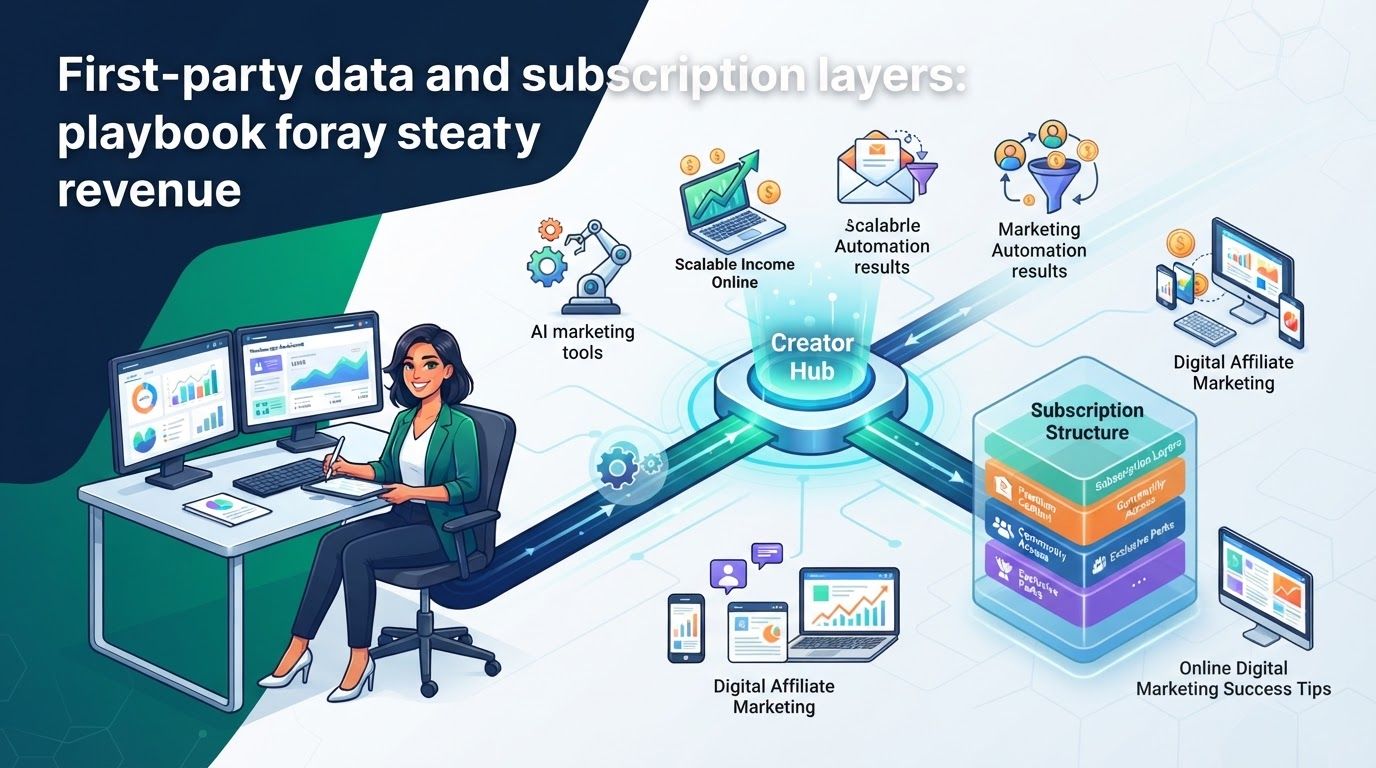
A creator can publish consistently, grow an audience, and still struggle to turn that attention into dependable income. Modular growth stacks offer a different approach: connect a few tools and revenue streams around the relationship with your audience, rather than relying on one platform payout or the occasional sponsorship.
That does not mean buying every tool marketed to creators. For affiliate marketers and home-based entrepreneurs, the useful question is which pieces help people discover your work, stay in touch, trust your recommendations, and buy something that genuinely serves them. The answer will differ for a newsletter writer, a video educator, and a community builder.
Why modular growth stacks matter when creator spending is rising
More money flowing into creator marketing does not mean most creators are earning more. CreatorIQ's January 2026 State of Creator Compensation reports that the top 10% of creators captured 62% of payments in 2025, even as its estimate of the global creator-marketing market reached $32.6 billion. Slice's 2026 roundup, citing CreatorIQ survey data, says 67% of creators earn under $10,000 a year and creator income is not the main income source for 62%.
Other spending estimates use different definitions. Marketing Dive's summary of IAB data puts creator-economy spending at $37 billion in 2025 and projects $44 billion in 2026. Those figures should not be treated as interchangeable with CreatorIQ's creator-marketing estimate, or with broad estimates of the entire creator economy. What they do show together is a growing commercial market in which an individual creator still needs a workable business model.
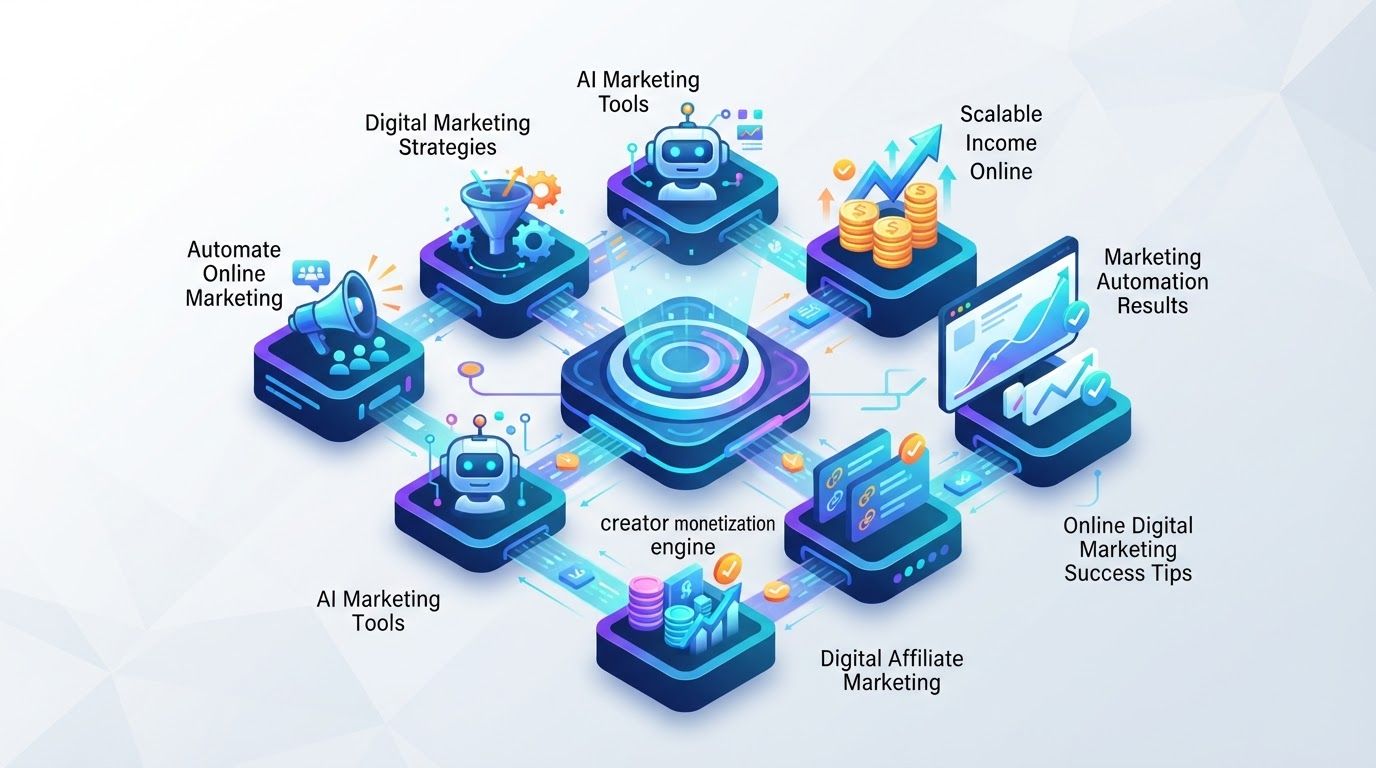
A modular growth stack connects audience discovery, an ongoing audience relationship, and several suitable ways to earn. Its purpose is to make income less dependent on any single post, deal, or platform payout.
Consider a creator who teaches beginners how to set up a home office. A useful video might introduce someone to the creator. A newsletter can carry the conversation beyond the video feed. Relevant affiliate links can help readers choose equipment, while a paid setup guide can serve people who want a complete plan. Each element has a distinct job; none requires the creator to abandon the original content format.
The alternative is not necessarily to become a large, complicated media company. A creator with a small audience may need only one publishing channel, one reliable way to contact interested readers, and one carefully chosen offer. The value of modularity is that another piece can be added when a real audience need appears, without rebuilding the whole business.
This also changes how to judge progress. Follower count and views can signal reach, but they do not tell you whether people return, click through to resources, join a list, or purchase. A modest audience that repeatedly finds a creator's recommendations useful may be a better foundation for a small business than a burst of attention with no continuing connection.
What belongs in a creator growth stack?
Think of the stack as a set of functions, not a shopping list of apps. A useful starting point is to map the path someone takes from finding your content to getting a result worth paying for. The tools should support that path and pass along only the information needed to make it work.
- Discovery: A search-friendly blog, short-form video, podcast, social channel, or partner collaboration brings new people to a useful idea.
- Relationship: An email list, newsletter, or community gives interested people a reason to return and a way to hear from you again.
- Offers: Affiliate recommendations, services, digital products, memberships, and brand partnerships provide different ways to meet different needs.
- Operations: Checkout, email automation, scheduling, customer support, and basic reporting help you deliver what you promise without repeating every task by hand.
These functions can live in separate products or in one platform. Axios has described creator platforms evolving toward one-stop-shop toolkits, noting Substack's recording studio tools and Beehiiv's additions in podcast hosting, monetization, and digital-product sales. For someone starting at home, an integrated platform may mean fewer connections to maintain. Separate tools may offer more control over a particular workflow, but they can create extra setup and troubleshooting work.
Choose the connection before the feature
A feature is valuable only if it helps someone move naturally to the next useful step. If a reader downloads a free checklist, for example, can they receive relevant follow-up without being added to an unrelated sales sequence? If a podcast listener wants the product mentioned in an episode, can they find a clear, current link? These are practical stack questions, not simply software questions.
Before adding a tool, identify what it will receive, what it will send, and who will maintain it. A new community platform is not helpful if you cannot make time to welcome members. A sophisticated dashboard is not helpful if you have not decided which actions matter. Simple workflows usually make weak points easier to spot.
For beginners, one reasonable setup is a primary publishing channel, a newsletter, and a single monetization method that fits the content. Add checkout or community software when an offer needs it. A more established creator may need segmented email, product delivery, and better reporting because they serve multiple audience groups. Both are growth stacks; their complexity should reflect the work the business actually does.
How multiple revenue rails change creator monetization
A revenue rail is simply a way money reaches the business. Creator monetization becomes more resilient when those rails match distinct audience needs instead of competing to sell the same thing. Someone exploring a problem may welcome a free recommendation; someone implementing a solution may prefer a guide, service, or ongoing support.
Circle says its previous year's data showed 54% of creators offered paid memberships and 41% relied on recurring subscriptions, alongside products, services, and brand deals. Those figures describe what creators in its data offered; they do not mean every creator should launch a membership. The Influencer Marketing Factory's 2026 report also shows how much experimentation remains: 27% of creators planned a digital product or brand, 20% a physical one, 36% were still considering a launch, and 17% had no such plans.
- Affiliate partnerships can fit tutorials, comparisons, and resource lists when the recommended product solves a problem the creator understands. The creator does not have to build the product, but earnings depend on the partner's terms, tracking, and the reader's decision to purchase.
- Digital products can package a repeatable method into a template, course, or guide. They require creation, updates, delivery, and support; a download is not maintenance-free just because it is digital.
- Services let a creator help someone implement advice directly. They can reveal what customers repeatedly struggle with, although the creator's available time limits how much can be delivered personally.
- Memberships and communities can support ongoing learning or access. They make sense when members will receive continuing value, not merely when recurring billing sounds attractive.
- Brand partnerships can fund content aligned with the audience, but a creator should be able to say no to a deal that weakens trust or pulls attention away from their main offer.
For an affiliate marketer, a practical combination might be a free tutorial, clearly identified affiliate links to tools used in it, and a paid implementation worksheet. Each has a different purpose. The tutorial helps people decide whether the approach suits them; the recommendations simplify tool selection; the worksheet helps buyers put the process into action. Someone who needs hands-on help could then choose a separate service.
Impact's 2025 affiliate-marketing report points to creators' upfront content costs and their need for predictable payment. That is a useful reminder that adding affiliate links does not automatically stabilize cash flow. Check commission rules, payment timing, attribution terms, refund treatment, and whether the partnership fits content you would want to publish anyway. Diversification works best when the rails are understandable to the creator and credible to the audience.
Why an owned audience supports recurring revenue
A social account can be an excellent discovery channel. It is a less secure foundation for the entire customer relationship because the creator does not control every decision about distribution or payouts. Circle's 2026 creator economy statistics frame owned recurring revenue, rather than platform-dependent income, as an increasingly important anchor for monetization. The practical takeaway is to give interested followers a clear reason to connect with you somewhere you can reach them directly.
An email list is one option, but ownership should not be mistaken for possession of addresses. People need to know what they signed up for, receive something relevant, and have an easy way to leave. A community can deepen the relationship when members also benefit from interacting with one another. Circle reports that 56% of creators in its community data launched their community in 2024 or 2025, suggesting many are building that layer relatively early rather than treating it only as a late-stage addition.
Give people a reason to stay
For a home-based entrepreneur teaching AI-assisted marketing, a free newsletter might share tested workflows and explain where human review remains necessary. A paid membership could add live implementation sessions or a maintained resource library. The boundary between free and paid should be understandable: free content establishes usefulness, while paid access helps someone make more progress or get continuing support.
Not every audience wants another subscription. Some people prefer a one-time template; others need occasional consulting. If readers repeatedly ask for a single solution rather than ongoing access, a product or service may fit better. Recurring billing creates an obligation to provide recurring value, and running a community requires moderation, planning, and attention to members who may be quiet but still expect a useful experience.
A sensible first test is to ask what people are already trying to do after consuming your free content. Look at replies and recurring questions. Offer a small next step that addresses one of those questions, then observe whether people use it and what remains difficult. That sequence is more informative than opening a membership simply because another creator has one.
Owned relationships also make the other rails easier to use responsibly. You can explain why a product is relevant, share a correction if a recommendation changes, or tell subscribers when a paid resource is not right for them. The goal is not to move every follower into a sales funnel; it is to build a channel where useful communication can continue beyond a single algorithmic impression.
Where AI and automation help the stack, and where they do not
AI is useful when it removes repetitive work or helps a creator examine information they already have. It can organize audience questions into themes, draft an outline for a tutorial, suggest ways to repurpose a long lesson, or help summarize responses to a survey. Automation can deliver a requested resource, route a purchase to the correct onboarding email, or flag a support request for follow-up.
That is broader than using AI to make more posts. A March 2026 arXiv study of how creators discuss monetizing generative AI identifies conversations about advertising, direct sales, affiliate marketing, and revenue sharing. Those discussions indicate possible business-model applications; they are not proof that adding AI to a workflow increases earnings. The more useful question is which task creates friction for your audience or your operation, and whether AI can help without reducing accuracy or trust.
- Start with a documented task. Write down the steps for a repeated process, such as turning a published tutorial into a newsletter summary. Decide what a good result must include before automating it.
- Keep a human approval point. Review factual claims, product details, links, pricing, and the tone of any recommendation. A confident AI draft can still be wrong or make a product sound more suitable than it is.
- Automate delivery only after testing it. Sign up as a subscriber, make a test purchase where possible, and confirm that messages arrive in the right order with working links.
- Watch for unintended effects. If an automated sequence brings confused replies or support requests, revise the workflow instead of adding more messages.
For an affiliate business, one especially useful application is maintaining a review process. A simple reminder can prompt you to revisit older comparisons and check whether the tools, terms, and instructions you discuss are still accurate. AI may help locate statements that need verification, but it should not silently invent updated product information. The creator remains responsible for the recommendation.
Automation has costs beyond a software bill. Every additional connection can fail, send an inappropriate message, or make customer information harder to manage. Use the lightest workflow that reliably serves the reader. A personal reply to an important question can be worth more than a polished sequence that never addresses what the person actually asked.
How to choose platforms without being locked into one payout
Platform payout rates attract attention, but they describe only part of a business. A 2026 creator pay index found that, among fixed-share platforms it examined, Kick offered a 95% creator share for subscriptions, while YouTube's Partner Program share for Shorts ad revenue was 45%. These are different products with different revenue bases. Comparing the percentages alone cannot tell a creator where their audience will watch, whether viewers will subscribe, or what they will earn after costs.
Start instead with audience behavior. If people search for detailed answers, a blog or longer video may make a helpful entry point. If they want ongoing conversation, a newsletter or community may serve them better. If they learn through demonstrations, audio or video can make the lesson clearer. The channel is the way people find and experience the work; the revenue rail is the way a suitable offer supports it.
Then evaluate the operational trade-offs:
- All-in-one platforms: Publishing, email, commerce, and sometimes audio tools may be easier to run together. Check which audience information and content you can export, and whether the bundled features meet your real needs.
- Separate specialist tools: These can give you more choice over each function. Check integration reliability, total cost, and how many manual fixes the setup demands.
- Platform-native monetization: Ads, subscriptions, or built-in commerce can be convenient. Understand the eligibility rules, payout terms, and how much of the relationship remains on that platform.
- Direct offers: Products and services let you shape the customer experience more closely. They also make you responsible for delivery, support, and clear purchase information.
Before committing to a platform, imagine needing to change one piece in a year. Could you move your content, subscriber relationships where permitted, product files, and customer records? Could you update links without breaking an important guide? Modularity is most valuable when replacing one function does not require starting the entire business again.
That does not mean avoiding platforms with large audiences. Their discovery tools may be the best way for new people to meet you. Use them deliberately, with a next step that people genuinely want, rather than assuming their payout system must carry the whole business. A creator can benefit from platform reach while building a separate relationship and offer that remain understandable on their own.
How to build a modular stack without overbuying tools
The easiest stack to manage is the one you can explain on a single page. Map what you publish, who it helps, where interested people go next, what you offer, and how you deliver it. If a tool has no clear place on that map, wait before adding it. This approach is particularly useful when you are building alongside a job, family responsibilities, or other home-based work.
- Choose one audience problem. Be specific enough to recognize useful questions. Instead of trying to teach all of online business, you might help beginners set up their first affiliate content workflow.
- Publish where you can show the solution. Pick a format you can sustain and that makes the advice clear. A demonstration may call for video; a repeatable checklist may work better as an article.
- Create a relevant return path. Offer a newsletter, resource, or invitation that continues the same conversation. Tell people what they will receive rather than promising vague growth tips.
- Add one fitting revenue rail. Choose an affiliate recommendation, small digital product, or service based on the help people request. Explain what the offer does and who may not need it.
- Connect and test the workflow. Check sign-up, delivery, tracking, purchase, and support from the reader's point of view. Fix confusing steps before expanding.
- Review what people actually do. Look for repeated questions, useful replies, completed purchases, and points where people stop. Add a second offer or channel only when it addresses a visible need.
This sequence leaves room for different business models. A person who loves teaching but not community management can focus on guides and products. Someone whose best work happens in live conversation may offer a small service or membership. Another creator may decide not to launch a product at all and instead build a careful affiliate publishing business. The stack is modular because the pieces are chosen for the work, not because everyone installs the same set.
Budget for maintenance as well as setup. A new tool may save time at first and create more work later if links break, subscribers receive duplicate emails, or product instructions become outdated. Assign a simple owner and review rhythm to every active piece, even if that owner is just you with a calendar reminder. The aim is a system you can operate consistently, not a diagram that looks impressive.
What to measure before adding another monetization layer
A stack should help you make decisions, not produce a dashboard full of numbers you cannot act on. Click Analytic's 2026 creator-economy report emphasizes supply, contactability, growth, and audience quality together. For a small creator business, that points toward measuring whether the right people can find you, stay in touch, and get value from an offer, not merely whether a post reached a large audience.
Choose a few observations for each part of the path. For discovery, note which topics bring relevant questions or visits. For the relationship, notice whether new subscribers receive the promised resource and whether replies show genuine interest. For offers, track which recommendations people use, what buyers ask afterward, and whether support requests reveal a confusing promise. Review those signals together rather than celebrating an isolated spike.
Use the numbers to make a specific change
If a tutorial attracts attention but almost no takes the next step, first check whether the next step fits the tutorial. A guide about choosing a beginner-friendly tool should not abruptly push an unrelated premium membership. If people click an affiliate link but return with the same setup question, clearer instructions may be more useful than another promotional post.
Revenue matters, but so does the work required to earn it. Compare an offer's income with the time spent creating, updating, and supporting it. A service may generate sales while leaving little room to publish; a low-maintenance product may still need a substantial rewrite when the process it teaches changes. Consider cash timing too, especially if you pay for production before a partnership or product begins to earn.
It is easy to mistake a growing market for proof that every new layer will pay off. Alignment Growth Partners reported that funding for creator-economy businesses rose 97% year over year to $2.5 billion in 2025, reflecting investor interest in the infrastructure around creators. That says something about the market for tools; it does not validate a particular subscription, app, or offer for your audience. Your own delivery quality and customer feedback are better guides to the next decision.
Set a review point before adding another channel or revenue rail. Ask what the current setup does well, where people get stuck, and whether the proposed addition will solve that specific issue. Sometimes the best growth move is not expansion. It is improving a welcome email, updating an old comparison, or making an existing product easier to use.
Modular growth stacks are reshaping creator monetization by separating the jobs of reaching people, maintaining a relationship, delivering value, and earning revenue. That gives creators more ways to build a business than waiting for a platform payout or a brand deal, while making each choice easier to evaluate on its own merits.
Start with the smallest path you can deliver well: one useful publishing channel, one clear way to stay in touch, and one offer that fits an audience need. Test the path as a reader or customer would, improve what causes friction, and add another module only when it has a job worth doing.